Every takeoff and landing puts enormous stress on this critical assembly. Three points of contact support thousands of pounds of impact load cycling through structural, hydraulic, and mechanical components. This guide focuses on why landing gear overhauls take as long as they do, what drives costs higher than expected, and how operators can plan smarter to avoid costly AOG surprises.

When aircraft landing gear requires unexpected maintenance or repair, consequences can ripple across flight schedules, revenue, and fleet availability. For operators worldwide, minimizing landing gear downtime is not just a maintenance goal — it’s a business imperative.
Why Landing Gear Maintenance Can’t Be Postponed

Landing gear is one of the most complex systems on fixed-wing aircraft. Retractable landing gear assemblies combine multiple integrated systems that must perform reliably across thousands of cycles:
- Structural components and hydraulic actuators
- Electrical sequencing systems
- Wheel and brake assemblies
- Landing gear compartment doors
- Nose landing gear and main wheels with distinct load profiles
- Trailing link assemblies and steering mechanisms built to strict specifications for diameter tolerances and material requirements
The Federal Aviation Administration (FAA) enforces hard-time life limits, calendar intervals, and cycle-based overhaul thresholds for landing gear components. When the FAA identifies an unsafe condition through its investigation process, it publishes a proposed AD (Airworthiness Directive) in the Federal Register with defined compliance times and a closing date for public comment.
Operators must also track each service bulletin issued by OEMs, which may introduce new certification maintenance requirements that affect overhaul planning. Internationally, organizations like the Civil Aviation Authority in the UK impose parallel requirements that global fleets must reconcile.
The result is that landing gear overhauls are among the longest and most resource-intensive MRO events an operator will face, often pulling an aircraft out of service for weeks or even months.
The True Cost of Landing Gear Downtime
The direct costs of a landing gear overhaul are significant on their own. But indirect costs can exceed them. A grounded passenger plane creates a chain reaction:
- Lost revenue on every missed flight
- Potential lease penalties
- Schedule disruptions across the fleet
- Flight crew reassignment challenges
When downtime is unplanned, the cost-impact figure climbs rapidly. An AOG event triggered by mechanical failure during a routine inspection can cascade into fleet-wide operational disruption.
Consider the scenario: a gear issue discovered during a landing inspection at a busy hub grounds an aircraft indefinitely while parts are sourced. Nearby facilities may lack the specialized MRO capability to handle the repair, compounding delays.
Operators who treat landing gear reactively, waiting for problems to surface rather than planning overhauls proactively, consistently pay more in total lifecycle costs. The financial math is straightforward: planned downtime is manageable, while unplanned downtime is disruptive.
Common Causes of Extended Turnaround Times
Several factors drive landing gear turnaround times beyond initial estimates.
Parts availability is the most frequent bottleneck. Hard-to-source components can add weeks to an overhaul:
- Actuators and trunnions
- Bushings and seals
- Specialized fasteners and locking hardware
- Even something as small as a missing zip tie, or a wire locking device, can hold up reassembly if inventory is not staged in advance.
Unexpected inspection findings expand the original work scope. Common discoveries include:
- Corrosion inside the landing gear compartment
- Unexpected wear on wheel assemblies
- Fatigue cracking in structural forgings
- Operators who fly in harsh environments such as coastal salt air, high altitude desert conditions, or extreme temperature cycles tend to see more of these surprises.
Coordination gaps between MRO providers and parts suppliers create additional delays. When repair and inventory are managed by separate vendors, communication gaps slow every decision point. Outdated or incomplete maintenance records further compound the issue by making teardown evaluation less predictable.
OEM obsolescence is another growing challenge. When OEM parts become back-ordered or discontinued, operators without access to DER-approved repair alternatives face open-ended delays. This is especially common on aging fleet types where manufacturer support has diminished.
Strategies to Reduce Landing Gear Turnaround Time
Operators who consistently achieve shorter turnaround times share several common practices:
- Plan overhauls ahead of hard-time limits. Scheduling gear overhauls based on flight hour trends and fleet availability, rather than waiting until the last possible cycle, creates flexibility and avoids emergency inductions.
- Pre-kit critical components before induction. Working with your MRO partner to identify and stage high-probability replacement parts before the gear arrives eliminates the single biggest source of delay.
- Choose an MRO partner with integrated inventory access. When parts sourcing and repair capability exist under one roof, decisions happen faster. PAG’s ISMRO® (Inventory Supported Maintenance, Repair, and Overhaul) model was built specifically to eliminate the gap between needing a part and having a part.
- Leverage DER-approved repairs. When OEM solutions create bottlenecks from obsolescence, long lead times, or cost, DER engineering provides FAA-approved alternative repairs that keep overhauls on schedule.
- Consolidate vendors. Managing fewer vendor relationships reduces coordination overhead and gives operators a single point of accountability for turnaround commitments.
- Invest in predictive maintenance data. Vibration analysis, wear trending, and health monitoring allow operators to anticipate overhaul scope before induction, reducing the likelihood of surprise findings.
Building an AOG Prevention Strategy for Landing Gear
Even with strong planning, unexpected events happen. High-profile incidents across the industry, including American Airlines events and emergency belly landing scenarios captured on live broadcast, serve as reminders that landing gear failures can escalate into full-scale operational crises. Every gear-up landing captured on the evening news represents a failure in either equipment or planning.
A crash landing or gear-up event affects more than the aircraft. It affects passengers, the flight crew, and the operator’s reputation. Smart AOG prevention strategies include:
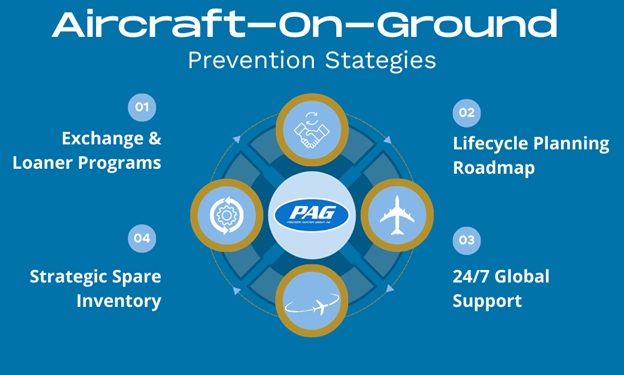
- Establishing exchange and loaner gear programs that keep aircraft flying during scheduled overhauls
- Maintaining strategic spare inventory for high-failure-rate components on the main wheels and nose gear
- Partnering with an MRO provider that offers around-the-clock AOG support with global reach
- Building a landing gear lifecycle roadmap tied to fleet utilization forecasts
Understanding when each aircraft in the fleet will require gear overhaul and aligning those events with scheduled downtime prevents the overlap that strains maintenance capacity. The principle is always the same: plan the work, then work the plan.
What to Look for in a Landing Gear MRO Partner
Not all MRO providers are positioned equally for landing gear work. Operators should evaluate potential partners on several key criteria:
- FAA and EASA certification depth
- In-house parts inventory versus reliance on third-party sourcing
- DER engineering capability for beyond-OEM solutions
- Global footprint that delivers consistent service regardless of aircraft location
- On-time turnaround track record
- Communication protocols during overhaul, especially when mid-overhaul scope expansion occurs
Precision Aviation Group: Built for This Challenge
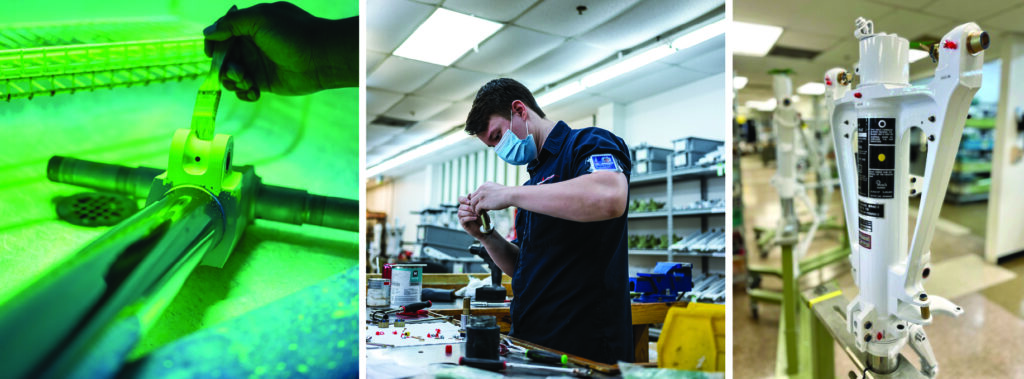
PAG’s integrated MRO and supply chain model directly addresses the root causes of landing gear downtime. With 26 FAA-certified repair stations across 28 worldwide locations, the ISMRO® business model, DER engineering capability, and 24/7 AOG support, PAG gives operators a single solution partner for landing gear overhaul planning, parts sourcing, and rapid-response support.
Contact PAG to discuss overhaul planning, exchange programs, or AOG support for your fleet.
In Perfect Step: Landing Gear Safety
TRACE Aviation – PAG Component Services
TRACE Aviation – King Air Landing Gear Exchange & Overhaul
TRACE Aviation – King Air Maintenance & Repair
Trace Aviation Services Brief PDF